


1. Begin at the threshold
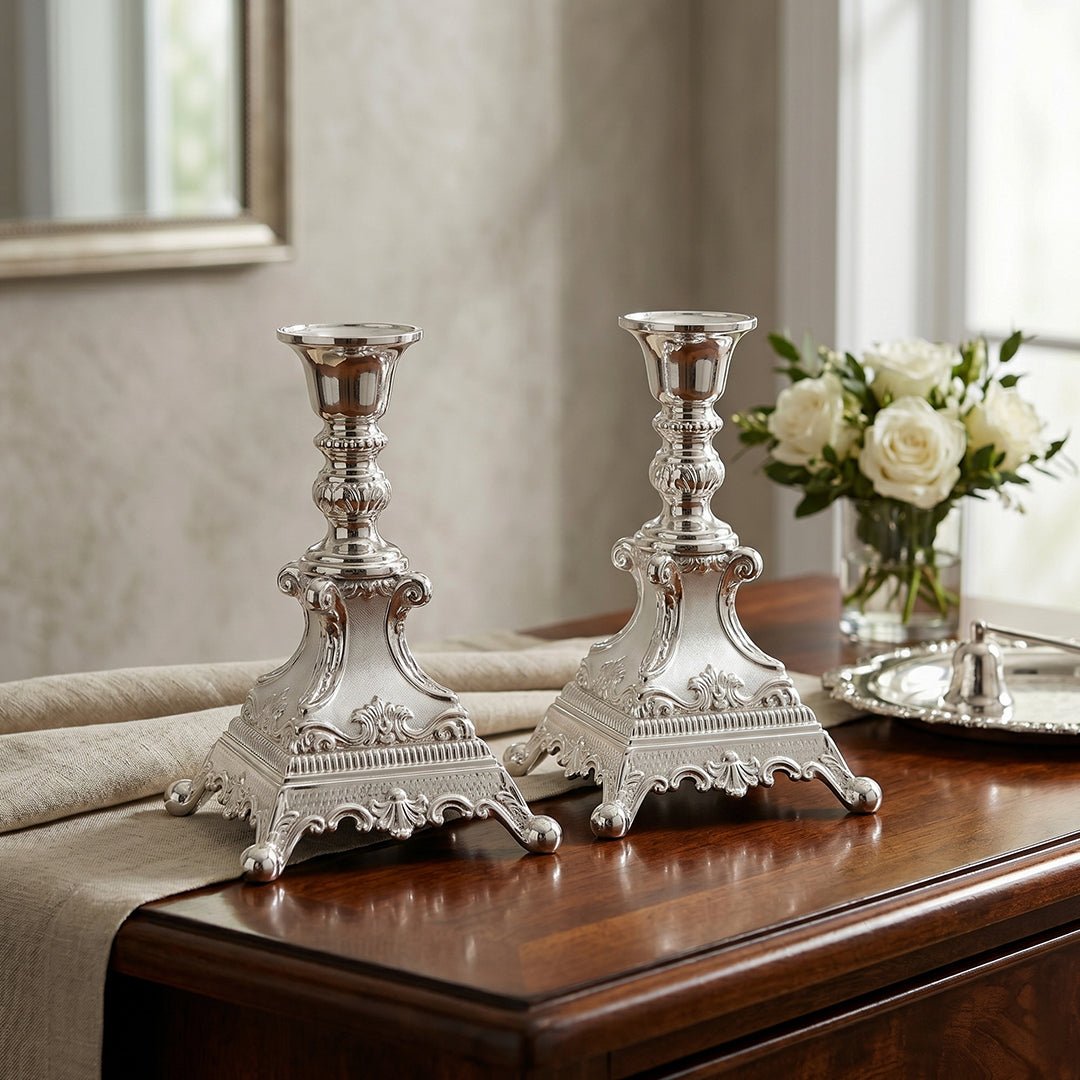
A guest forms an opinion of a home within seconds, and nothing in a hallway speaks as quickly as light at eye level. Clear the entrance console of the year’s accumulated keys, post and bowls. Then dress it with a single idea: a matched pair of candle holders at either end, one vase between them, and nothing else.
Symmetry at the door signals ceremony, while the asymmetry you allow inside signals ease. The Classic Candle Holder Pair is the right scale of gesture for this job. It is modest in presence, sold as a pair, and made to flank rather than dominate. Leave a hand’s width of bare surface around each holder. That emptiness is what makes the flame look deliberate.
2. Build light in odd numbers and uneven heights
A row of identical flames reads as a runway. A cluster of varied ones reads as a room that has been lived in beautifully. Group your light in threes and fives, and let the heights disagree: one tall, one mid-height, one low and wide.
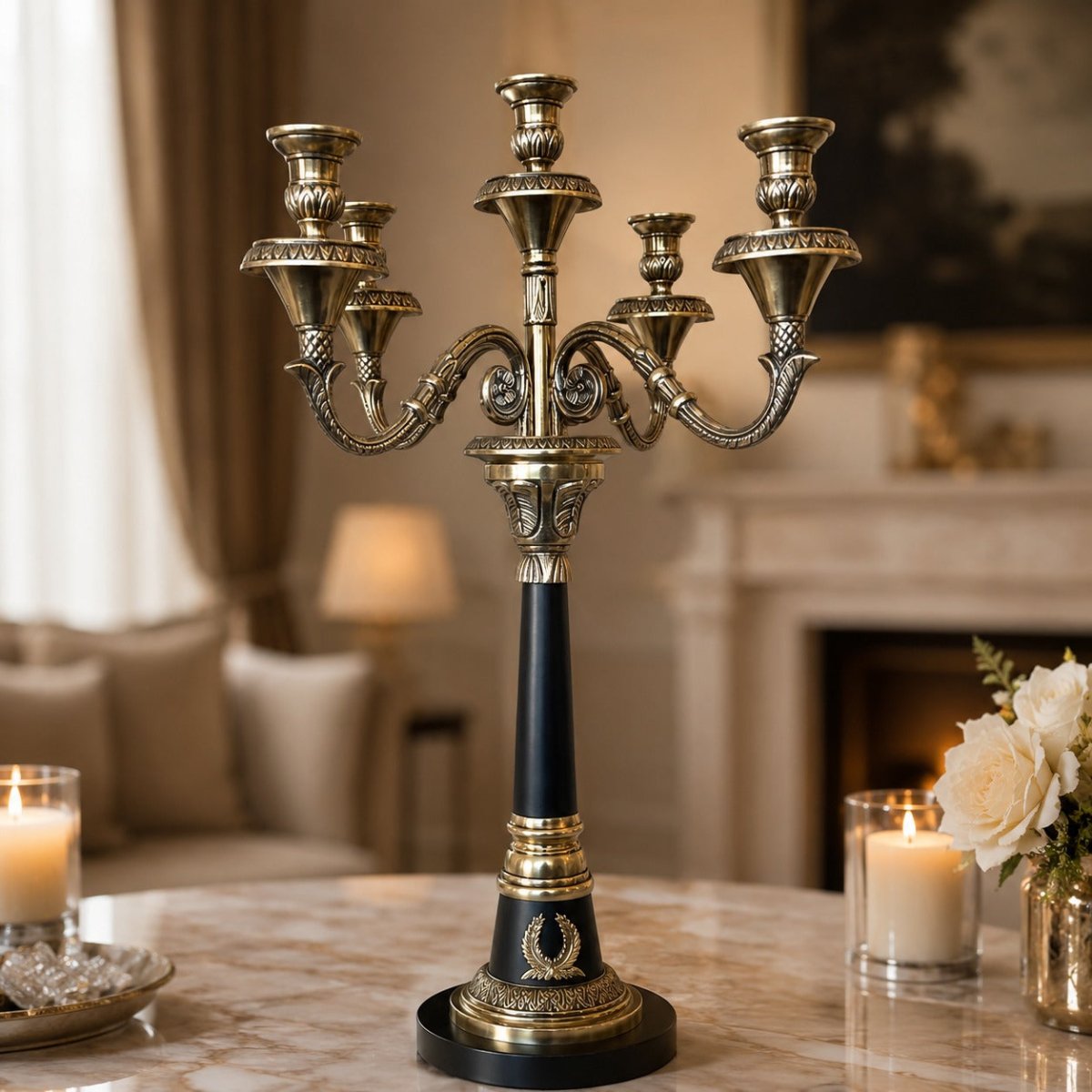
For a dining table or a long console, a multi-branch piece does this work in a single object. The Regal Six Candle Stand gives you a candelabra’s drama without needing to assemble it. Pair it with the Regal Hurricane, where a sheltered flame can sit near an open window or a doorway. One practical rule outranks every aesthetic one: keep naked flame well clear of curtains, silk and dried garlands, and give every holder a flat, stable base.
3. Let crystal do the flattering
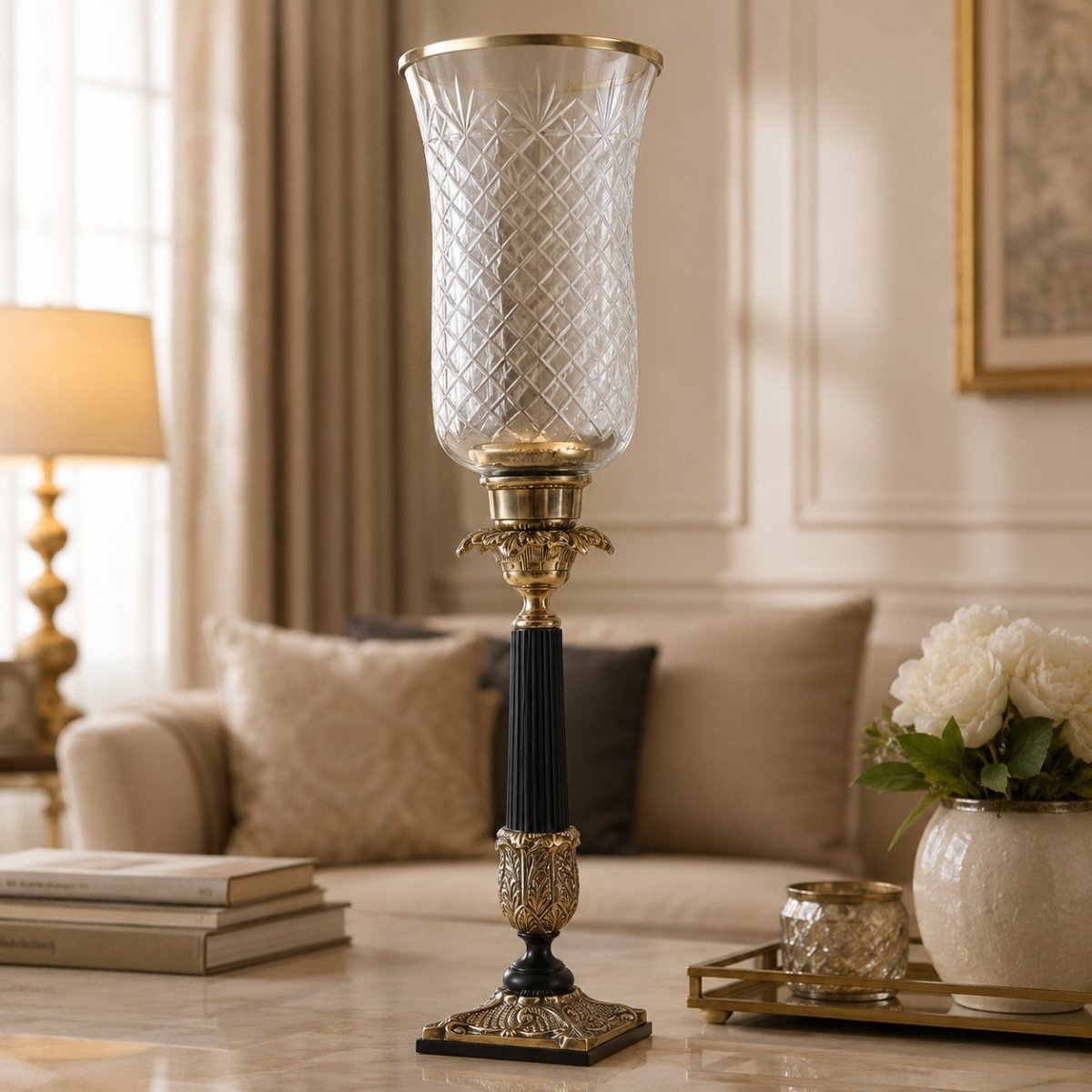
Brass and metal hold a flame. Crystal multiplies it. A single lit wick set inside faceted or cut glass throws a scatter of small reflections across the tabletop and the nearest wall, so one candle begins to do the work of several.
The Crystal Candle Holder comes in two sizes, small and large (large here). Use them together for the sake of scale. Place the large one at the centre of a table and the small one a little off-axis, so the eye travels between them. This is also the cheapest way to make a room feel lit at the level of the glass rather than the ceiling. Dim the overheads, since crystal needs a dark room to perform.
4. Commit to a colour that isn’t red
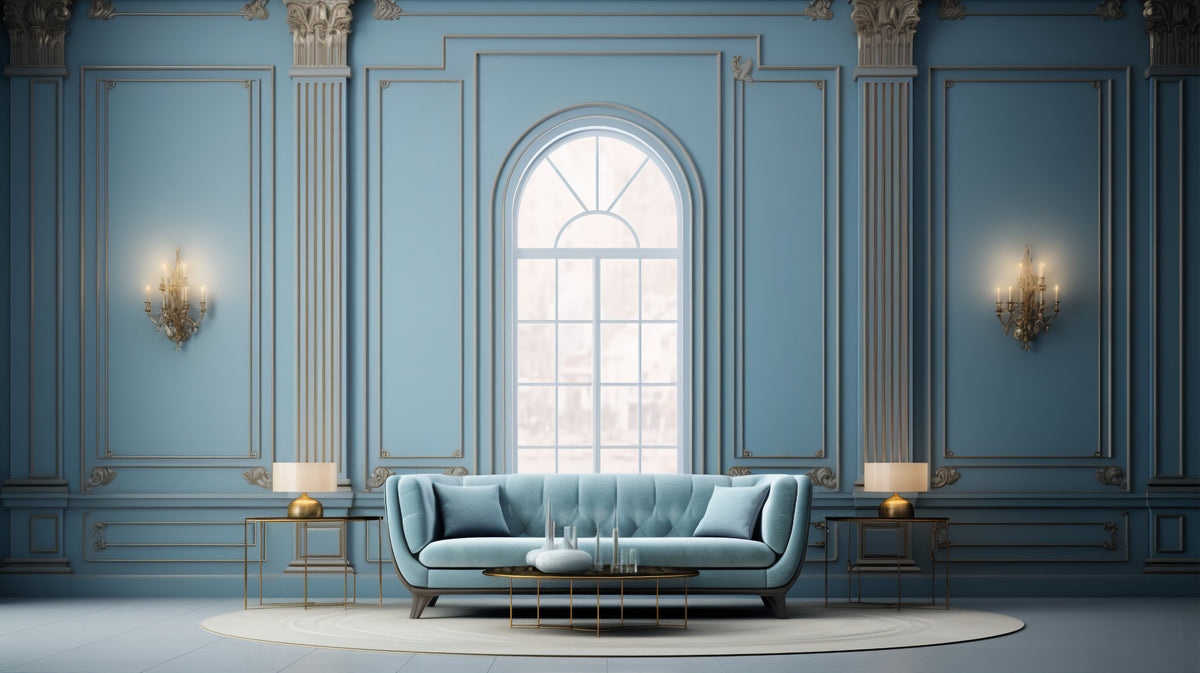
Diwali’s visual vocabulary is saturated, with marigold orange, vermilion and fairy-light white. That is beautiful, but it is also what every other home on the street will have done. The more distinctive move is to choose one deep, cool colour and let the festival’s gold play against it.
Deep blue is the natural candidate. Gold against indigo has the gravity of a night sky with a few stars in it, and it makes flame look warmer than it does against cream. Niyaz’s own “Spaces, Reimagined” story is built around exactly this idea of deep blue and quiet grandeur, and its pedestal collection shows how raised plinths can give objects a gallery-like authority. Choose the blue for the largest surface, such as a cushion, a throw or a wall of art, and keep the gold to small, bright accents.
5. Replace the florals with sculpture
The Diwali centrepiece is conventionally a mass of marigolds. Marigolds are lovely and belong in the home, but they wilt by the second evening, and they crowd the sightlines that a good table depends on.
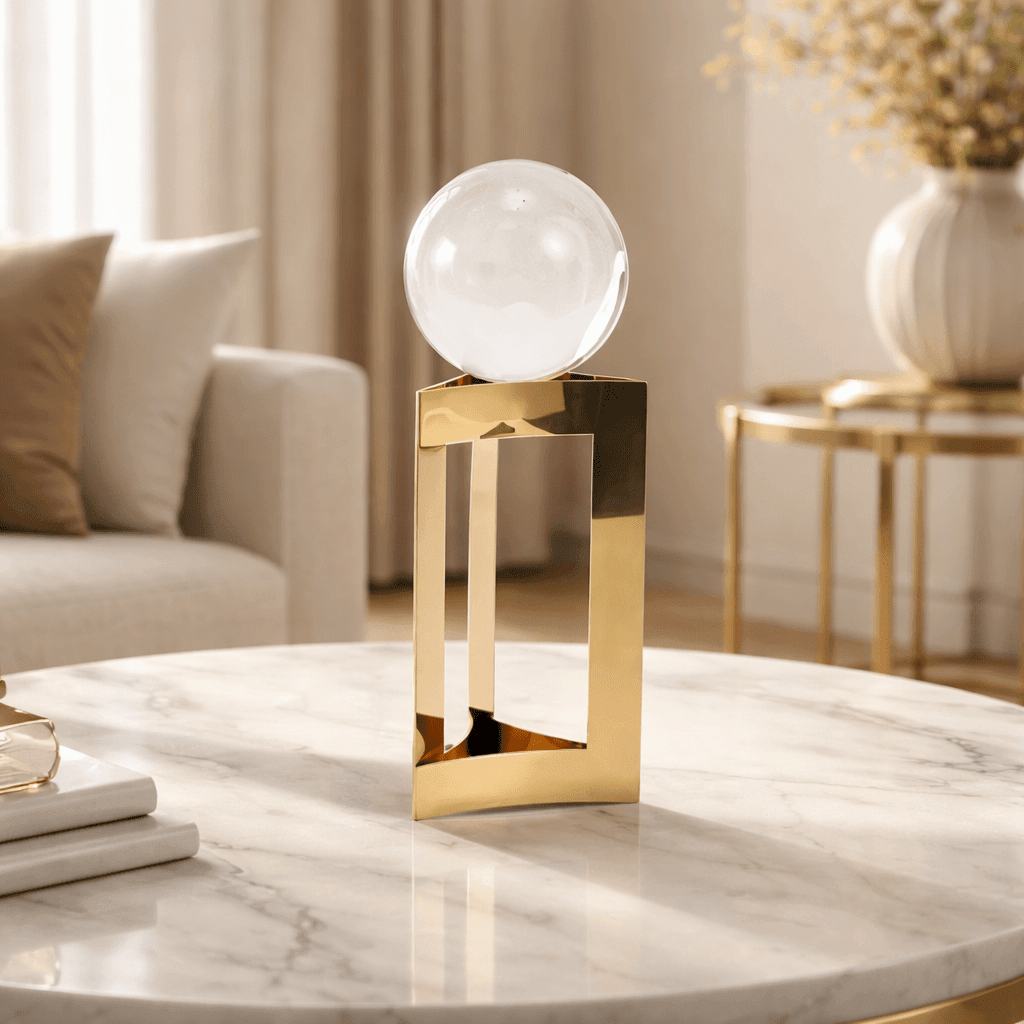
Consider a sculptural object as the permanent anchor instead, and bring flowers in as supporting cast in small vessels along the edges. An object with a quiet silhouette, such as The Balancing Sphere (Large), gives the table a focal point that doesn’t compete with the food, the faces or the flames. The test is simple: sit down at the table and look across it. If you can see your guest’s face past the centrepiece, the design is working.
6. Give the vase a role as silence
Every well-dressed room needs one object that does nothing. In a festival that is loud by design, a considered silence is the most luxurious element you can introduce.
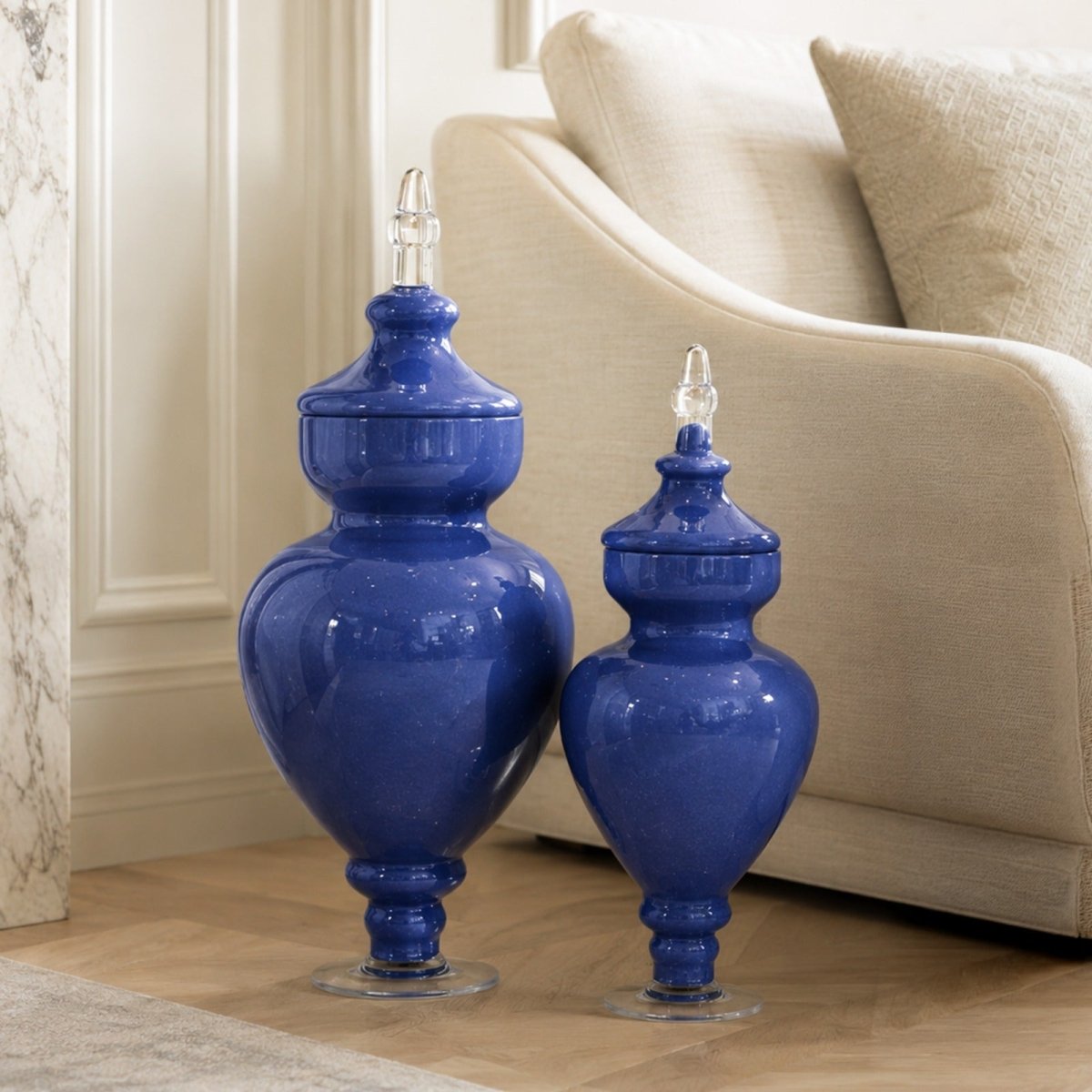
A lidded vase suits this role well. Closed, it is pure form, and with no stems poking out it asks nothing of the eye. Place the Allure Flower Vase with Lid on a side table or a bookshelf, away from the main action, and let it serve as a pause between busier compositions. If you want flowers nearby, put them in a second, simpler vessel beside it, so that the two read as a conversation between restraint and abundance.
7. Frame the people who aren’t at the table
Diwali is a festival of reunion, and every family has someone who cannot be there, whether through distance or loss. A framed photograph, placed with care near the puja space or on the mantel, is the most moving and least decorative thing you can add to the room.
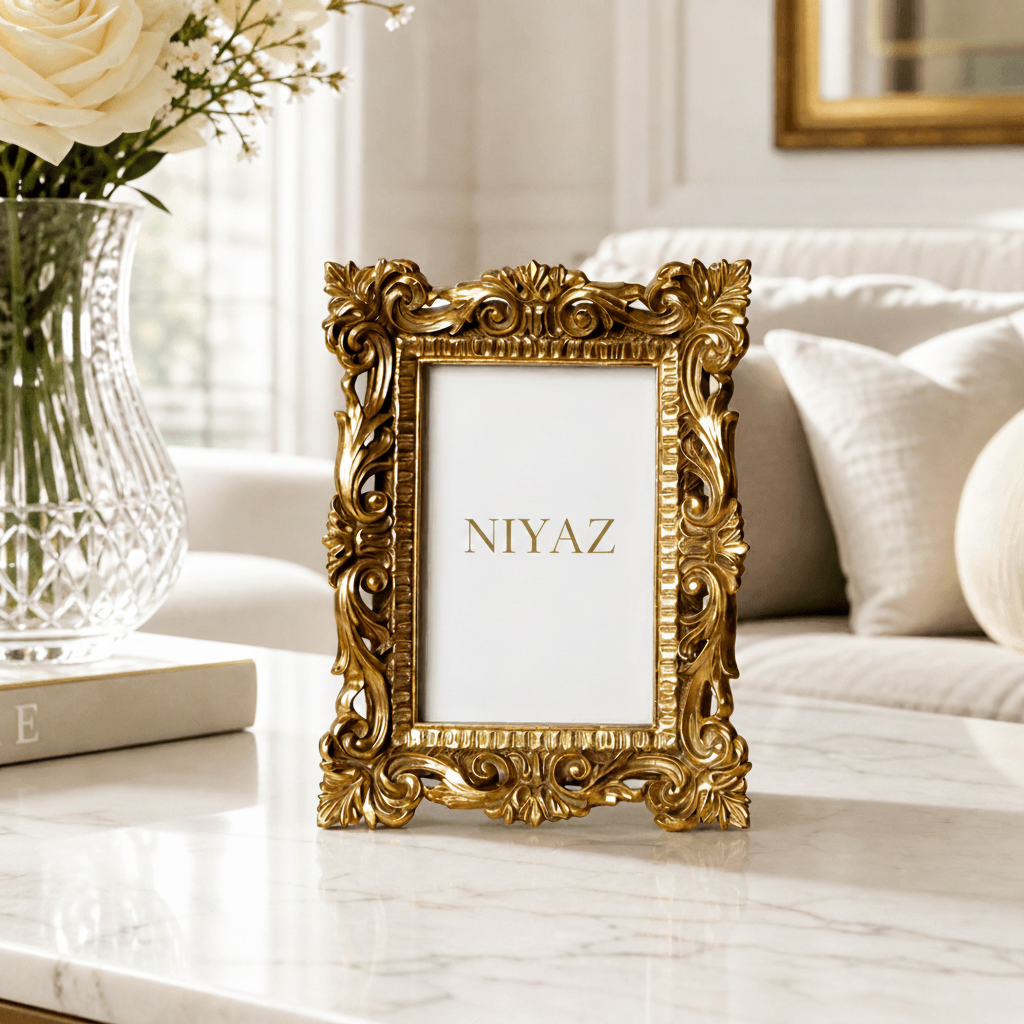
Choose a frame with enough presence to say the photograph matters, and enough restraint not to upstage it. The Antique Gold Photo Frame fits that brief, as its warm finish sits naturally beside diyas and brass. Print the photograph in black and white if the original is old or faded, and light a single diya beside it. No other styling decision will be remembered as long.
8. Serve the sweets on something worth keeping
Mithai arrives in boxes, and boxes are fine for transport. But the moment you place sweets in front of a guest is the moment of presentation, and a plain tray undersells the gesture.
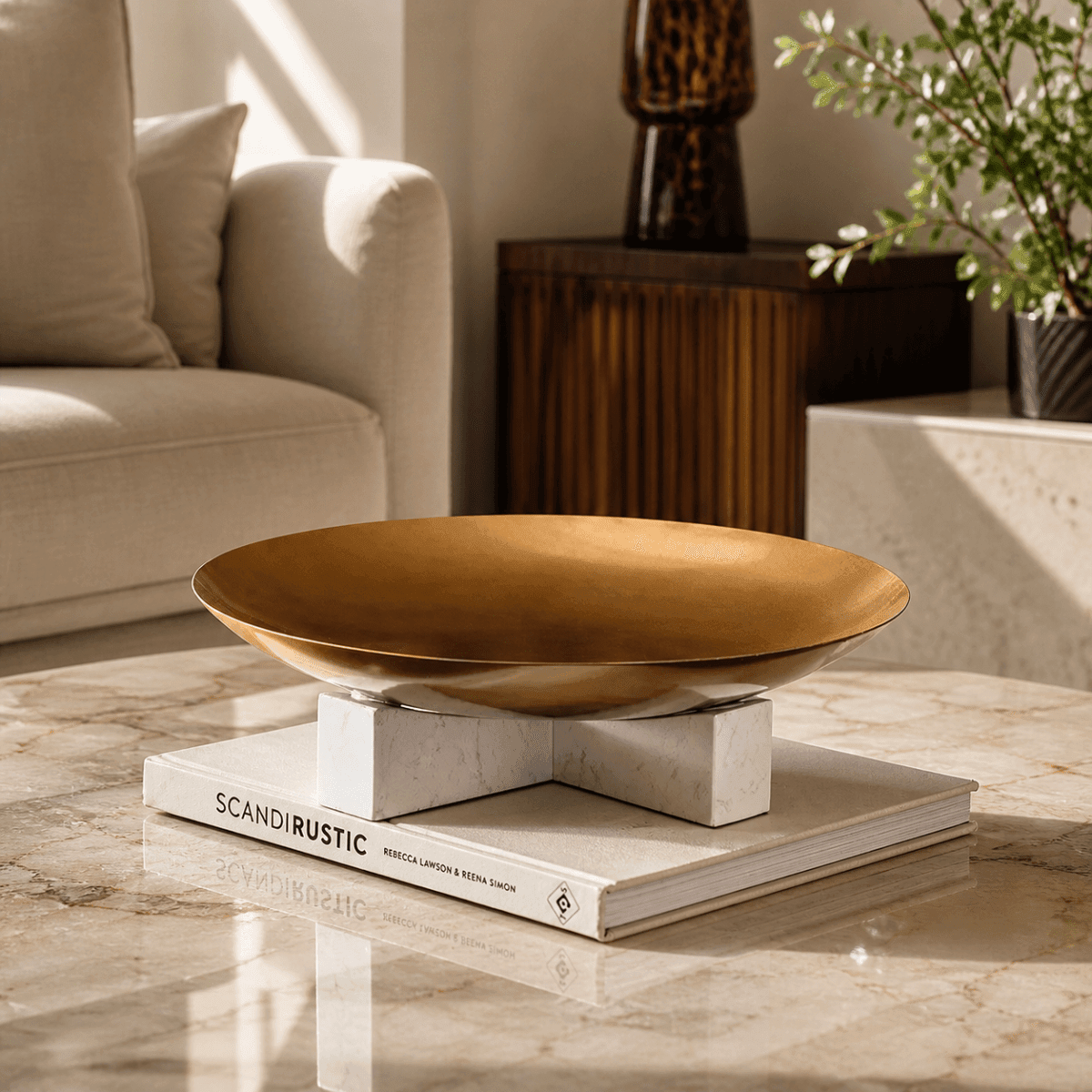
A serving piece that is also a sculpture earns its place on the table all evening, even when it is empty. The Abstract Gold Serving Platter is built for exactly that double life. Arrange the sweets with discipline: one variety per quadrant, with space between them. A tray that looks edited, with four sweets chosen rather than forty heaped, tells the guest that the host has taste, which is a more flattering message than abundance.
9. Make the glass the jewellery of the evening, and leave room for a slower game
Diwali evenings stretch long. The conversation moves from the table to the sofa, and the glassware moves with it. This is where good tabletop quietly earns its keep, because a drink in a beautiful glass changes the pace at which people drink and talk.
Niyaz’s glassware and tabletop collection offers several registers. The Emperador Wine Glass set of four arrives in a gift box, so it doubles as a present. The Blue and Amber Ombre Water Glass set brings colour to the table without a single flower. For hosts who like a proper home bar, the Luxe Bar Mixologist Set and the Nordic Wine Stand in Gold finish the corner.
Then consider what happens after dinner. Card tables are a familiar Diwali tradition, and a chess set is a quieter cousin for those who prefer a slower contest. Leave a board set up on a low table and let it start its own conversations.
10. Stage the gifting before anyone arrives
The final detail is the one guests carry home. Gifting at Diwali is part of the choreography of the festival, yet the gifts themselves are often piled in a corner or handed over in a shopping bag.
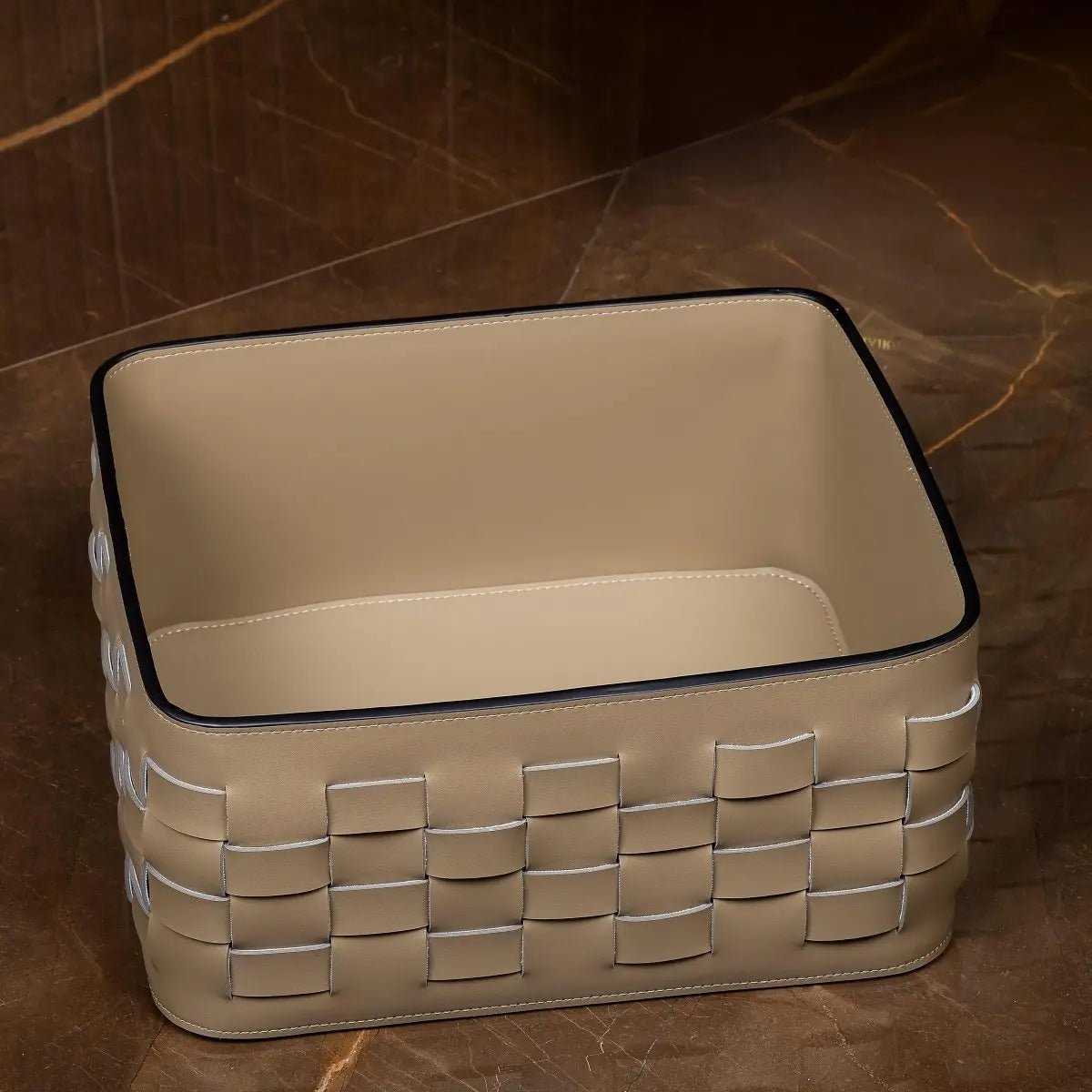
Stage them. A generous, structured basket in the hallway, filled with wrapped gifts and waiting for the end of the evening, turns the moment of leaving into a small ceremony. The Aubrey Leather Basket has the scale for it, and it stays useful after the festival as storage for throws or magazines. Wrap everything in two colours at most, tie each with the same ribbon, and write every card by hand. The aim is for the guest’s last impression of the house to be as considered as their first.
The edit, not the inventory
If these ten ideas share a logic, it is subtraction. A luxurious Diwali is rarely the one with the most in it. It is the one in which each object has been given enough space to be seen, and each flame enough darkness to matter. Begin by removing, then add one beautiful thing at a time, and stop a little earlier than feels natural.
Niyaz describes its philosophy as luxury defined not by excess but by “the quiet presence of objects that possess beauty, meaning and a sense of permanence.” That is a good test for any Diwali purchase, since a piece should still look right on the ninth of November, when the lights are down and the guests have gone home.
0 comments